About Me

Wednesday, March 8, 2023

Finding the Perfect Home for Your Homesteading Dreams


Finding the Perfect Home for Your Homesteading Dreams


By Lance Cody-Valdez


Your retirement years provide a perfect opportunity to slow down, find joy, and reconnect with nature. If you have ever dreamed of starting a homesteading hobby, you can get started by searching for the right house where you can live out your goals. 


Whether you want to live off the land, practice a new craft, or just create an atmosphere for your family to visit, the ideal home is out there waiting for you. With a few tips in mind, including those shared below by The Homestead Village Blog, you will be ready to start this next step.


Know What to Look For


Real estate publications propose the idea that most buyers are more interested in the location rather than the features of the house itself. This will likely ring true for you as well since you probably need a spacious property away from urban areas to practice your homesteading hobbies comfortably.


There are, however, certain key features to prioritize depending on your personal goals. If you want to live a minimalist lifestyle, you need a fireplace for heat and a woodlot for chopping your own firewood. You also need plenty of acreage if you would like to try your hand at growing your own food or ranching, as well as a workshop for any crafts you intend to practice.


Be Prepared When Buying


Unless this is your first outing as a homebuyer, you likely know what to expect from the transaction process. Work closely with your real estate agent to ensure that you have a resource for answering any questions that may arise.


When you find the home of your dreams, one issue to remember is that you may need to act quickly to seal the deal before another interested party comes along. This might even entail buying the new house before selling your old one. If you believe that you're close to finalizing the sale on your old home, you can request an extended closing on the new transaction to give yourself a little extra breathing room.


Plan Out How to Use Your Space


Once you have moved into your ideal homestead, you will have the freedom to use the space for all manner of new hobbies. As one idea, you might try horseback riding. Raising horses is a fulfilling pastime, and riding can grant a sense of exhilaration and help you form a meaningful connection with nature. 


A few other homesteading hobbies you might try can include:


• Baking

• Beekeeping

• Gardening

• Farming

• Soapmaking


Consider Turning Your Homestead Hobby Into a Business


Creating beautiful crafts, preserving food, and raising animals are all hobbies that can be turned into successful businesses. You will need a functional business plan if you decide to make some extra money in your retirement by selling your products. Make sure to outline the goal of your new venture, your methods for selling products and services, and the funding you will need  to advertise and distribute. 


When registering, you will also need to settle on a business structure and maintain legal compliance with your state government.


Whatever vision you have for life after retirement, there is no denying that your home is an important part of it. You deserve to spend your golden years pursuing new experiences that make you feel fulfilled and independent. This does not mean that you have to shut yourself away from friends and family, though. You can enjoy a life that includes all of your loved ones by finding the perfect homestead to suit your dreams.



Tuesday, January 18, 2022

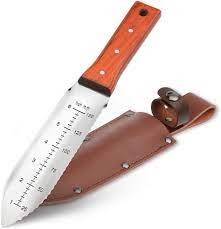
Hori-Hori Knife. Why Gardeners Need One!


Hori Hori Knives and Why Every Gardener Needs One


While the Hori Hori knife has been around for quite a while, with its beginnings from Japan,  it has recently just caught the attention of many gardeners because of the knife's strong build and versatility of garden uses. 


Click to View
 

The Hori Hori knife has different features on each side.  On one side, the 7-inch blade of the knife has a smooth, razor-sharp edge. The other side of the knife has a heavily-serrated edge that looks like a saw blade.  The tip of the knife comes to a semi-sharp point at the end.


Most are made of 440 Stainless steel, is rust-proof, break resistant and very durable.  Some come with a leather sheath for storing, which I would recommend as this knife is invaluable in my garden.


Click to View


Here are several ways that a Hori Hori Knife is Useful in the Garden.


Removing Stubborn Weeds


The smooth, razor-sharp straight knife blade side is ideal for removing long-rooted weeds since the tip and knife glide easily through soil. The Hori Hori knife is also referred to as a "soil knife" for that reason.


The easiest way to use this knife for weeding is to slide the blade down next to the center of the weed, move the handle away to the side of the weed then pull firmly on the weed. The blade  helps to loosen the soil around the root so the weed can come right out, root and all.


Removing Stumps


Small stumps of old bushes and trees can be removed with this knife, too.   Since it’s also a knife as well as a saw, it can cut through the roots easier than a trowel and it’s a much better tool for prying.


Dividing Thick-Rooted Perennials


The heavily-serrated side of the knife can be used as a saw when dividing plants with solid roots such as hostas or other mature perennials.


Great for Planting Seeds and Seedlings


Use the tip of the knife for digging rows in the soil for sowing seeds or planting seedlings. 


Dig Planting Holes at the Right Depth


Click to View


There are Hori Hori knives like the one above that have a depth scale marked on one side so you know exactly how deep you're digging.
 

I also use this knife to enlarge a hole already dug for a plant when I find that that hole needs just a tad more width.  Just slice the soil around the sides.


Click to View


Harvesting Food Crops


Use the  sharp knife end to cut off 
 herbs, vegetables or fruits, or anything you would use scissors for like cutting ties or twine.


Harvest root vegetables inthe same way you use it for deep-rooted weeks.


Click to View


Remove Sod and Grass Easily


The blade of the knife can easily slide through the soil so it can be used to cut through and remove sod and grass.


~~~~~~~~~~~~~~~~~~~~~~~~~


I'm sure you could find several other uses for this sturdy, versatile knife.  And you can stop carrying around so many heavy tools that the Hori Hori Knife can replace!

~~~~~~~~~~~~~~~~~~~~~~~~~

Follow us on Pinterest!

Hit the "Follow" Button on our Home Page


This post may contain Amazon affiliate links and as an Amazon Associate I earn from qualifying purchases without costing you anything extra.


Friday, January 14, 2022

Tulle - Best Uses in the Garden!


Tulle Fabric 

Ten Uses in the Garden!


If you've never used Tulle fabric in your garden, you're missing out on a great opportunity!


First, what is Tulle fabric? Tulle is a soft, fine silk, rayon or nylon material commonly used to make wedding veils and dresses.


Advantages of Using Tulle Fabric in the Garden


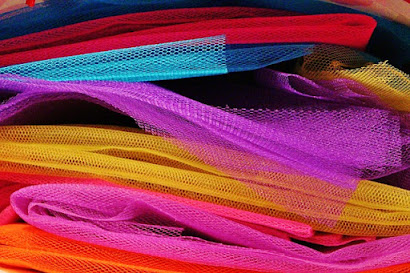
  • Tulle fabric is available by the bolt in a wide range of widths, colours and mesh sizes and can be easily found at any fabric store or ordered through  Amazon.


    Click to View


    It is as tight as it is light so water and air can easily go through it.


  • If you purchase the white or a light-colored Tulle, you can see the plants through the fabric. And because it does not obscure your view of the plants, you can visually inspect the garden without having to remove any covers.  Most floating row covers are too densely-woven to see through.  


  • Tulle is easy to secure to garden beds or containers with clothes pins or clips. 


  • Tulle can be used year after year.


    Click to View


  • It comes in a variety of colors!


Ways to Use Tulle in the Garden


1. Covering Freshly Seeded Areas


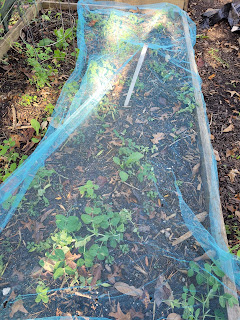
The Tulle fabric is so light that you can just drape the fabric right over the planted area without crushing tiny seedlings.


Pea seedlings are a favorite food of birds.  And since I encourage birds to visit my yard, I have to protect the young pea seedlings.  Tulle is perfect for that!


Click to View


2.  Tulle Fabric as a Row Cover


Tulle can be used on young squash plants and the like. It's a great alternative to buying expensive netting.


Click to View


3.  Tulle As Bird Netting


Regular bird netting can catch on plants, can catch on small bird claws and can be very difficult to remove. Rolling up, storing and untangling bird netting can be another problem.


Tulle doesn’t catch nearly as much as the bird netting does, and is easy to remove and is tangle free.


Click to View


4.  Pest Deterrent - Insect Barrier


Tulle can be used to cover your eggplant to protect the plant from flea beetles. It's also effective in keeping out Japanese beetles.


The more coarse Tulle fabrics can be used as rabbit, deer and rat deterrent . They dont like to get tangled up with the Tulle.


5.  Tulle is especially useful when you're growing brassicas.


Brassicas are always a challenge to protect against flea beetles, aphids, and cabbage worms.   No problem.  Tulle fabric's netting holes are small enough to prevent cabbage butterflies from laying eggs on the leaves.


And since cabbage crops are cool-season crops, the Tulle netting allows for more air circulation around the plants than a floating row cover does.


6.  Frustrating Squirrels.


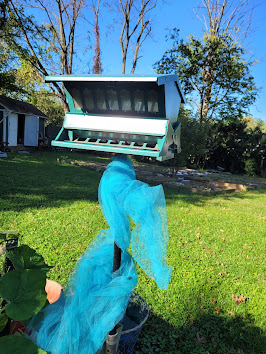
Got squirrels?  I do, and this is one of my favorite usds.  Use Tulle fabric around bird feeder poles to deter squirrels from climbing up to the feeder.  It only takes one time for the squirrels to get their nails caught in the fabric to keep them away from the bird food.


7.  Tulle as a Shade Cover


A cooling shade cover can make a huge difference for plants like snap bean plants that wilt badly in the mid-day summer heat. I use a double layer of Tulle for use as a shade cloth. Use a darker color for even more shade.


Click to View


8.  Tulle for Hardening Off Seedlings


When hardening off seedlings, get an extra layer of shade by using several layers of Tulle at first and then gradually reducing the number of layers as the plants get acclimated to sunshine. It's a good way to harden off your plants if you can't be home to move seedlings in and out of direct sun.


9.  Tulle to Completely Tie up Plants to Stakes


Cut the Tulle pieces into strips and use the strips to tie up top-heavy plants like tomatoes and peppers. Tulle will stretch to allow the plants to grow and won't hurt the plant.


10.  Tulle To Completely Cover Smaller Pots


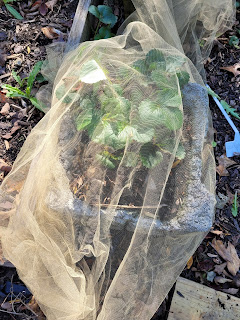
Larger Tulle fabric pieces can be used to drape over entire small or medium-sized containers.


If you're using the Tulle to cover fruiting plants, just remember to remove it once your plants begin to produce blooms so pollination can occur.


~~~~~~~~~~
Not sold on Tulle Fabric yet?  Here's a few extra ideas!
~~~~~~~~~~


11.  Tulle for Making Compost or Comfrey Tea


Wrap your compost or comfrey leaves inside a piece of Tulle and submerge them in a bucket of water for making compost or comfrey tea. Then simply pull out the Tulle when the tea is finished and ready to use to fertilize your plants.


12.  Tulle as a Fruit/Vegetable Sling for Heavy Plants on a Trellis.


Click to View


13.  Tulle for Seed Saving


If you're a seed saver, smaller pieces of Tulle fabric can be used to bag the fruits you want to save for seed later. Tulle fabric is what most blossom bags are made of.


The only down side I've noticed in using the Tulle fabric in the garden is the fact that it can tear easily. But luckily there are many uses for smaller pieces of Tulle.


Caring for the Tulle Fabric


I have found the washing machine to be quite harsh on Tulle fabric. One way to prevent it from catching on zippers and other clothing hardware is to tie the Tulle inside a pillow case when washing.


Washing Tulle by hand in cool water with mild soap works well. I have found that the Tulle fabric will last longer if the fabric is left to air dry instead of suing a dryer.

~~~~~~~~~~~~~~~~~~~~~~~~~~~~~~~~~~~~

Tulle:  It's not just for weddings anymmore. Have another way you use Tulle fabric in your garden? I'd love to hear about it.

~~~~~~~~~~~~~~~~~~~~~~~~~~~~~~~~~~~~


Where to go next:

Homesteading Articles: Full List

Follow us on Pinterest!

Hit the "Follow" Button on our Home Page

This post may contain Amazon affiliate links and as an Amazon Associate I earn from qualifying purchases without costing you anything extra.


Saturday, January 1, 2022

Welcome to The Homestead Village!


Welcome to The Homestead Village! 


Homesteading is a journey, an adventure, and an ever-evolving quest to make our homesteads more beautiful, run more efficiently, and be the haven that we've dreamed of creating for ourselves and our families. 

Whether your homestead is deep in the country or in an urban setting, you'll find helpful articles here!


So hit that "follow" button to follow our blog and come along for the ride!

Sunday, October 3, 2021

Growing the Right Potato the Right Way


 Growing the Right Potato 
the Right Way!


Digging up a bed full of plump, healthy spuds is one of the many joys of growing your own food. It's always exciting to see what has grown under the earth when the wait is finally over and it's harvest time.


But if your potato harvest has been rather disappointing, the reason may be as simple as not using the correct method of growing the potato for the type of potato you're trying to growing.

Wednesday, September 1, 2021

Learn to Winter Sow!


WINTER SOWING 101

What is it and Why is it So Popular?


In a nutshell, winter sowing, or winter seed sowing, is sowing seeds indoors in the winter in mini greenhouse-like containers, like milk jugs or other recycled containers, and setting the containers outside in the winter elements until Mother Nature germinates the seeds in the spring.  That basically is the winter sowing method.

Monday, February 15, 2021

Affordable Seed Starting Setup


Affordable Seed Starting Setup


Okay. $908 for a four-shelf "plant growth cart"? Saw it on Amazon. Yes, it has the lights attached, it's conveniently on rollers, and it's ready to use. But $908?


After spending way too long searching for a seed starting setup that wouldn't completely break the bank, I decided that it was worth the time to put one together myself, and I'm really glad I did.

Save Room Under Grow Lights - MultiSow Seeds!


Tray full of multi-sown seedlings
Tray of Multi-Sown Seedlings


Save Room Under Grow Lights!

Multi-Sow Seeds!


What's multi-sowing and why should you be doing it?


Multi-sowing refers to sowing several seeds, usually four to ten seeds depending on what you're growing, in the same seed-starting cell and allowing them to mature into small clumps. Then, rather than thinning them or planting them out one plant per space,  the entire clump is planted together.


Wednesday, February 10, 2021

Common Reasons Why Hypertufa Cracks


Why Hypertufa Projects Crack


This article presumes that you are familiar with the basics of making projects with hypertufa.  If you aren’t familiar with the process, or just need a refresher, you may want to first go to our Hypertufa 101 article by clicking here.

Epsom Salt For Your Veggie Garden


It's Organic and Economical!


Growing healthy, juicy vegetables is as much an art as it is a science. One of the most effective yet economical ways to ensure that you grow great vegetables, whether potted or in the vegetable garden, is to use Epsom Salt.

Monday, February 1, 2021

Give Your Onion Seedlings a Haircut!


Give Your Onion Seedlings a Haircut!


If there's one crop that I love to grow indoors from seed, it's onions.  Of course you can buy sets from your local hardware store or nursery, but there are usually only a few varieties available. 

So not only do I have a larger selection of onion types to choose from if I buy the seeds online and grow them myself, but I can start them earlier indoors and give them plenty of time to grow before they get planted out.

Tuesday, January 26, 2021

Winter Sow Your Vegetable Seeds!


Winter Sow Your Vegetable Seeds!


If you're looking for a fast and efficient way of germinating your vegetable seeds, give winter sowing a try.  


Sow your vegetable seeds in a container like a milk jug and place the containers outside for the winter months.  Mother Nature will germinate those seeds at just the right time.  


 First off, if you are unfamiliar with the basics of winter sowing, you may want to start with the Winter Sowing 101 article, then come back for the vegetable sowing specifics.

Thursday, January 21, 2021

Choosing the Best Birdbath!


Zebra Finch


Choosing the Best Birdbath


We all prefer birdbaths that add beauty and whimsy to our yards, but the birds themselves may be looking for something else, things that were designed for them in mind.

Wednesday, January 20, 2021

Winter Sown Seeds Have Germinated! Now what?


Winter Sown Seeds Have Germinated!

Now what?


So you’ve tried the winter sowing method and found out that it’s easy and it works. Mother Nature woke the seeds out of their sleep and now you’re getting lots of little seedlings popping up in their snug, cozy containers.

Wednesday, January 13, 2021

Seven Best Annual Flowers for Your Veggie Gardens


Seven Best Annuals for Veggie Gardens


Gardens can tend to look rather bland and can be more practical than beautiful. The addition of beautiful flowering plants can bring back the beauty that every garden deserves. Using the right annual plants strategically will not only bring the garden back to life visually but can help your veggies stay healthy and pest free.

Tuesday, January 12, 2021

Choosing the Right Bird Feeder


Choosing the Right Bird Feeder


Walking out on my back deck at 7 a.m. and hearing the happy chirping of the birds I have drawn into my yard makes the perfect start to my day.

Monday, January 4, 2021

Great Gifts for Bird Lovers!


Great Gifts for Bird Lovers!


Whether it's a birthday gift, Mother's Day, Christmas, or just a thank you for that bird lover you know, here are some great gift ideas!

Monday, December 21, 2020

Importance of Headspace when Canning


Why headspace in canning is important


Why is headspace so important?


Headspace is the space at the top of the canning jar between the underside of the lid and the top of the food or liquid in the jar. 


Quite simply, it's important because having the correct amount of headspace in the jar is important in order to get a good vacuum seal during processing.

Using Vinegar for Canning

 Farmer's Market Shelf with Canned Food


Which Vinegar to use in Canning


If you have been looking into the process of canning your own food, you've undoubtedly noticed a lot of talk about safe canning.  Some of the most-asked canning questions relate to the correct use of vinegar.

Ingredients Not Safe to Can


Shelf of colorful canned food


List of Items NOT Safe to Can


There are many critical areas of canning to learn before beginning, and one of the most important things to learn about canning is the ingredients that you should NOT can.  It may surprise the new canner to learn that there are foods that simply cannot be canned safely.  

Finding the Perfect Home for Your Homesteading Dreams

  Finding the Perfect Home for Your Homesteading Dreams By Lance Cody-Valdez Your retirement years provide a perfect opportunity to slow dow...